Metallized Stand-Up Pouches
Metallized stand-up pouches combine a barrier laminate with a shelf-stable shape. They are used for coffee, snacks, pet food, dry mixes and other products that need light and moisture protection.
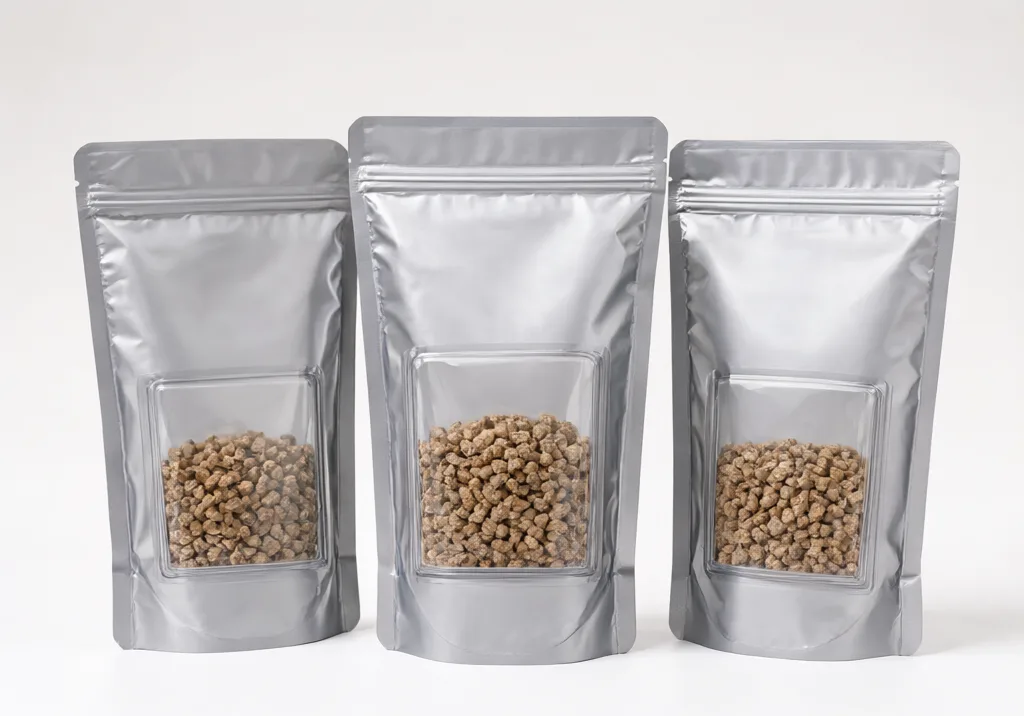
PacksFactory reference page for metallized stand-up pouches and related film formats. Temporary imagery; the supplied material is confirmed against the approved sample.
Pouch Structure
A typical metallized stand-up pouch uses a printed outer film, a metallized barrier layer and a sealant. The base gusset gives the pouch its stand-up shape. Coffee, snack and pet food structures may add a valve, zipper or high-barrier layer.
Closures and Features
Zippers, slider zippers, spouts, degassing valves, tear notches and hang holes change the filling equipment and the pouch construction. Each feature should be selected with the fill method and the consumer use in mind.
Print and Finish
The printed outer film carries the brand artwork. A metallized inner layer can show through transparent windows or remain hidden behind opaque print. Matte, gloss and soft-touch finishes change the look and the scuff resistance.
Filling and Sealing
The pouch must match the filler, the fill temperature, the product weight and the seal conditions. A sample filled on the actual line is the best way to confirm standing stability, seal integrity and opening performance.
Metallized Stand-Up Pouches Details
Metallized stand-up pouches are a practical finished format for dry and semi-dry products. The pouch stands on shelf, uses less material than a rigid container and can carry a large printed brand panel. A metallized barrier layer adds light and moisture protection, which is useful for coffee, snacks, tea, pet treats and dry mixes.
The structure usually combines a printed outer film, a metallized barrier web and a sealant. The base gusset is folded and sealed so the pouch stands when filled. A zipper, spout, valve or tear notch can be added, but each feature changes the pouch making process and the minimum order. Coffee packs often use a one-way degassing valve, while pet food and powders may need a wider fill opening or a heavier seal.
Pouch size should be based on the fill weight, the bulk density of the product and the desired shelf presence. A pouch that looks generous on screen may be too tall for the carton or too narrow for the filler. A physical sample filled with the actual product is the best way to confirm the proportion, the standing stability and the opening experience.
PacksFactory coordinates metallized stand-up pouch projects with qualified converters. Send the product, fill weight, pouch size, closure type, print artwork, quantity and destination country so the structure and sample path can be confirmed.
Metallized Stand-Up Pouches for Packaging and Converting Projects
Use this page to compare metallized stand-up pouches, film grades, thickness and width options, lamination structures, printing and converting requirements before requesting a quote. PacksFactory keeps the review focused on the finished pack, documentation and a repeatable roll or converted format.
How Metallized Stand-Up Pouches Is Specified for Production
Use this page as a sourcing brief for buyers comparing substrate, thickness, barrier, roll dimensions, print and converting requirements before requesting a quote.
| Decision Area | Production Detail |
|---|---|
| Primary search intent | metallized stand-up pouches, custom stand up pouch, metallized pouch packaging, coffee pouch |
| Best-fit film use | Custom pouch size and fill weight; Zipper, spout, valve and tear-notch options; Printed metallized laminate |
| Specification decisions | substrate, thickness, metallized side, roll width, core, treatment, barrier target, laminate structure, print method, converting route |
| Quote inputs | film or laminate type, substrate and thickness, roll width and length, core ID and outside diameter, surface treatment, print or converting plan, quantity, destination country |
Our team reviews film grade, barrier target, converting route, roll packing and delivery planning before quoting.
Our team reviews film grade, barrier target, converting route, roll packing and delivery planning before quoting.
Our team reviews film grade, barrier target, converting route, roll packing and delivery planning before quoting.
Our team reviews film grade, barrier target, converting route, roll packing and delivery planning before quoting.
What products use metallized stand-up pouches?
Coffee, snacks, tea, pet treats, dry mixes, grains and other products that need light and moisture protection and a shelf-ready flexible format.
Can the pouch include a zipper or valve?
Yes. Zippers, slider zippers, spouts, degassing valves and tear notches can be added, but each option affects the pouch structure, filling method and minimum quantity.
How do I choose the pouch size?
Start with the fill weight and bulk density, then confirm the pouch dimensions, fill opening and shelf proportion with a filled sample.
Is a metallized pouch suitable for coffee?
Metallized laminates are common for coffee, often with a degassing valve. The final structure should be matched to the roast, the pack size and the expected shelf life.