Metallized Film for Packaging, Labels and Converted Products
Metallized film adds a thin vacuum-deposited aluminum layer to a plastic film or paper substrate. It builds light, moisture and oxygen barrier into flexible packaging, labels and decorative cartons without the weight of foil.
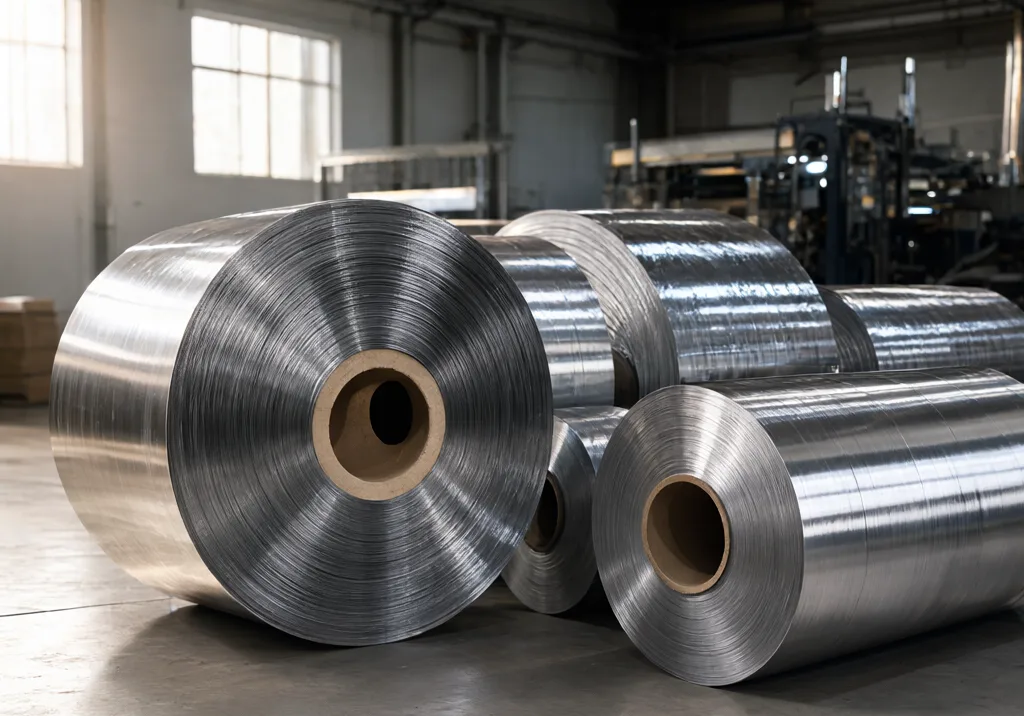
PacksFactory reference page for metallized film and related film formats. Temporary imagery; the supplied material is confirmed against the approved sample.
What Metallized Film Does
A metallized film is a substrate such as PET, cast PP, BOPP or paper with a very thin aluminum layer deposited in a vacuum chamber. The aluminum layer reflects light and slows moisture and oxygen transmission, so a lightweight film can replace part of the barrier role normally played by aluminum foil. The substrate still controls strength, stiffness, heat-seal behaviour and print surface.
The Three Buying Groups
Packaging film covers VMPET, VMCPP, VMBOPP, metallized paper and high-barrier coated film used in food and consumer laminates. Decorative and label film covers holographic, brushed and colored film, pressure-sensitive label stock and transfer metallized paper. Converted products cover finished pouches, bubble bags, custom roll slitting and printed film.
Film Grade and Thickness
VMPET is commonly quoted at 12, 15 and 18 micron, VMCPP at 20, 25 and 30 micron, and VMBOPP at 18, 25 and 30 micron. Thickness affects stiffness, seal support, runnability and cost. The metallized side, surface treatment, slip properties and roll dimensions also need to match the printing or laminating line.
Sourcing and Converting
PacksFactory sources and coordinates metallized film and converted formats through qualified film, coating and converting partners. Availability, barrier data, food-contact documentation, roll width, core size and lead time are confirmed against the approved specification before an order is placed.
How to Send a Film Brief
Send the film type or target structure, substrate and thickness, roll width and length, core ID and outside diameter, metallized side, treatment, print or lamination plan, quantity, destination country and any food-contact or barrier requirement. A reference photo or existing laminate structure shortens the specification check.
Metallized Film Details
Metallized film is one of the most efficient barrier materials in flexible packaging because the aluminum layer is extremely thin. It provides a bright metallic surface, reduces light transmission and improves moisture and oxygen barrier compared with an uncoated plastic film. That combination is why metallized film appears in snack bags, coffee packs, confectionery wrappers, labels, decorative cartons and many laminated pouch structures.
The substrate decides how the film behaves. VMPET (metallized polyester) is stiff, printable and dimensionally stable, so it is often used as the middle barrier layer in a laminate. VMCPP (metallized cast polypropylene) is heat-sealable and is used as an inner seal layer. VMBOPP (metallized biaxially oriented polypropylene) offers stiffness and moisture barrier for snack and candy formats. Metallized paper uses a paper substrate for labels and cartons, while AlOx and SiOx coated films provide a transparent high-barrier alternative.
A metallized film is rarely used alone. Most food packaging is a laminate: a printed outer film, a metallized barrier layer, an adhesive, and a sealant layer. The final barrier, seal strength, puncture resistance and food-contact suitability depend on the whole structure, not only the metallized roll. For that reason the brief should describe the finished pack, the fill weight, the storage condition and the converting route, not just a micron figure.
PacksFactory does not publish stock prices for metallized film. Film is quoted per specification because width, thickness, metallized side, treatment, roll length, core size, printing, lamination and order quantity all change the production plan. Send the target structure and destination country, and the team will confirm what can be sourced or converted, which documents are available, and what information is still needed before pricing.
The pages below separate packaging film, decorative and label film, and converted products so buyers can start at the right level. Each page explains the common grades, the specification fields that matter and the questions to settle before sampling. Temporary imagery is used on these pages while the final material photography is prepared.
Metallized Film for Packaging and Converting Projects
Use this page to compare metallized film, film grades, thickness and width options, lamination structures, printing and converting requirements before requesting a quote. PacksFactory keeps the review focused on the finished pack, documentation and a repeatable roll or converted format.
How Metallized Film Is Specified for Production
Use this page as a sourcing brief for buyers comparing substrate, thickness, barrier, roll dimensions, print and converting requirements before requesting a quote.
| Decision Area | Production Detail |
|---|---|
| Primary search intent | metallized film, metallized packaging film, VMPET film, VMCPP film |
| Best-fit film use | VMPET, VMCPP and VMBOPP film options; Metallized paper, label stock and holographic film; Lamination, printing, slitting and pouch converting |
| Specification decisions | substrate, thickness, metallized side, roll width, core, treatment, barrier target, laminate structure, print method, converting route |
| Quote inputs | film or laminate type, substrate and thickness, roll width and length, core ID and outside diameter, surface treatment, print or converting plan, quantity, destination country |
Our team reviews film grade, barrier target, converting route, roll packing and delivery planning before quoting.
Our team reviews film grade, barrier target, converting route, roll packing and delivery planning before quoting.
Our team reviews film grade, barrier target, converting route, roll packing and delivery planning before quoting.
Our team reviews film grade, barrier target, converting route, roll packing and delivery planning before quoting.
What is the difference between metallized film and aluminum foil?
Metallized film carries a very thin vacuum-deposited aluminum layer on a plastic or paper substrate. Aluminum foil is a solid metal sheet. Foil usually gives stronger absolute barrier and dead-fold, while metallized film is lighter, more flexible and often lower cost for a given pack.
Which metallized film is best for food packaging?
VMPET is common as a barrier layer, VMCPP as a heat-seal layer and VMBOPP for snack and candy formats. The right choice depends on the full laminate, the food type, the storage condition and the converting line, not on the film alone.
Can PacksFactory supply printed or converted metallized film?
Yes. PacksFactory can coordinate printing, lamination, slitting and pouch converting through qualified partners. Send the finished format, artwork status, quantity and destination country so the converting route can be confirmed.
How is metallized film priced?
Pricing depends on substrate, thickness, width, roll length, core size, metallized side, treatment, print or lamination requirements, quantity and delivery terms. Film is quoted per specification rather than from a public price list.
Are the images on these pages the exact material?
No. The images are temporary reference visuals. The supplied film, surface finish and print result are confirmed against the approved sample and specification.
/materials/metallized-packaging-film/
Decorative & Label Metallized Film/materials/decorative-metallized-film/
Converted Metallized Products/materials/converted-metallized-products/
VMPET Metallized Film/materials/vmpet-metallized-film/
Metallized Stand-Up Pouches/materials/metallized-stand-up-pouches/
Request a Film Quote/quote/